Powering science at the molecular frontier.

The operating system for molecular biology labs.

Design sequences, plan experiments, analyze results, and document your work in one connected workspace.

pET-28a-GFP× Cloning protocol× Lab Dashboard× Gibson workflow× clone_1–4.ab1×
Chats New chat +⤢⋯×
I put GFP into pET-28a for E. coli. Check the design before I order.
  • Checking the design · GC content, construct size
  • GC content · within the typical range

GC content is in the typical range, and 6,089 bp is in range for E. coli. The record annotates EGFP under the T7 promoter and includes KanR. Nothing was changed; this was a check.

Write the cloning protocol for the pET-28a-GFP build we discussed yesterday.
  • Searching your lab notebook
  • Reading a notebook entry · Gibson plan: EGFP into pET-28a
  • Designing a protocol
  • Creating a notebook entry

I took the backbone, the insert and the 25 bp overlaps from yesterday's entry. The protocol covers PCR, DpnI, assembly, transformation and the colony screen, with reaction tables, materials and QC. Once you approve it, it is saved as an entry you can edit, sign and lock, or save as a template.

What is the lab working on today?
  • Checking tasks
  • Searching your lab notebook

Five work items across the lab: two to do, one in progress, two done. Colony picking is due today.

Plan a Gibson assembly for pET-28a-GFP and design the primers.
  • Designing primers for GFP · 4 primers
  • Simulating the Gibson assembly · 2 fragments
  • Checking Gibson assembly overlaps

Workflow ready: two PCRs, Gibson at 50 °C for 60 min, then transform into DH5α. The primers are ready to order.

Which of these four clones match the design?
  • Aligning the sequences · 4 reads to pET-28a-GFP
  • Comparing sequences

Clones 1, 3 and 4 match the design across the insert and both junctions. Clone 2 has one mismatch at position 14, G to A, inside the EGFP coding sequence. Pick clone 1 or 3 for the glycerol stock.

Ask me anything… +Auto↑
pET-28a-GFP6,089 bp · circular DNA Sequence locked
pET-28a-GFP6,089 bp · 16 annotated features

EGFP · T7 promoter · lacI · ori · KanR · f1 ori

Enable JavaScript to explore the annotated sequence.
EGFP · 207–926 · reverse strandClick a feature · Scroll the map to rotate

Gibson assembly: EGFP into pET-28a

Saved Linked Comments
Draft ProjectReporter expression AP CreatedToday Add property

Two-fragment Gibson assembly of EGFP into pET-28a (NdeI/XhoI site, N-terminal His-tag in frame), from the plan recorded on Gibson plan: EGFP into pET-28a. 25 bp overlaps on each junction.

Estimated time: 2 days (bench time 3 h) · Difficulty: intermediate · Yield: 6,089 bp circular, KanR

Reaction setup: PCR (50 µL, one per fragment)
ComponentVolumeNote
Q5 Hot Start 2× Master Mix25 µL
Forward primer, 10 µM2.5 µLbb_F / ins_F from yesterday's design
Reverse primer, 10 µM2.5 µLbb_R / ins_R
Template1 µLpET-28a 5 ng; EGFP source 5 ng
Nuclease-free water19 µL
Protocol steps
  1. PCR the two fragments. Duration 2 h · 98 °C / 62 °C / 72 °C 98 °C 30 s; 30 cycles of 98 °C 10 s, 62 °C 20 s, 72 °C 30 s per kb (backbone 5.3 kb: 2 min 40 s; insert 0.7 kb: 25 s); final 72 °C 2 min. Run 5 µL on a 1% gel: expect 5.3 kb and 0.75 kb.
  2. Treat with DpnI. Duration 1 h · 37 °C Add 1 µL DpnI (20 U) straight into each PCR. 37 °C for 1 h. Removes the methylated template so empty parent vector does not come through.
  3. Clean up and quantify. Duration 20 min · room temp Column cleanup, elute in 15 µL. Nanodrop both fragments; A260/280 of 1.8 or better.
  4. Assemble. Duration 60 min · 50 °C Backbone 0.05 pmol (170 ng of 5.3 kb), insert 0.1 pmol (47 ng of 0.72 kb), NEBuilder HiFi 2× Master Mix 10 µL, water to 20 µL. 50 °C for 60 min, then on ice. Include a backbone-only control.
  5. Transform and plate. Duration 1.5 h + overnight · 42 °C / 37 °C 2 µL of assembly into 50 µL DH5α; ice 30 min, 42 °C 30 s, ice 2 min, 950 µL SOC, 37 °C 1 h shaking. Plate 100 µL on LB + kanamycin 50 µg/mL, 37 °C overnight.
  6. Screen colonies. Duration 3 h · day 2 Colony PCR on 8 colonies with T7 promoter / T7 terminator primers: expect about 1.0 kb with insert, about 0.3 kb for empty vector. Miniprep two positives and send for Sanger with the T7 primers.
Materials required
ItemSupplierCatalog #
NEBuilder HiFi DNA Assembly Master MixNEBE2621
Q5 Hot Start High-Fidelity 2× Master MixNEBM0494
DpnINEBR0176
Monarch PCR & DNA Cleanup KitNEBT1030
DH5α chemically competent E. coliNEBC2987
LB agar plates, kanamycin 50 µg/mLin house
Equipment needed
  • Thermocycler
  • Heat block or water bath at 42 °C and 50 °C
  • Shaking incubator, 37 °C
  • Spectrophotometer (Nanodrop) and gel electrophoresis setup
Safety notes
  • BSL-1 organism; standard microbiological practice, autoclave all cultures and plates before disposal.
  • Kanamycin stock is an irritant; weigh in a fume hood and wear gloves.
  • Use a non-mutagenic DNA stain; if using ethidium bromide, handle gels with nitrile gloves and dispose as hazardous waste.
Quality control checkpoints
  • After PCR. Gel: single band at 5.3 kb (backbone) and 0.75 kb (insert). Pass: no smear, no primer-dimer band.
  • After transformation. Colony count: assembly plate at least 10× the backbone-only control. Pass: control under 10 colonies.
  • After sequencing. Sanger with T7 primers, aligned to pET-28a-GFP. Pass: 100% identity across the insert and both junctions.

Protocol generated by Plasmole AI · Difficulty: intermediate · Estimated time: 2 days

Kim Lab

MineTeamProjects Search items… New item
1 overdue
To do2
Pick coloniespET-28a-GFPAPHighToday
Order EGFP primersGibson workflowPRMedTomorrow
In progress1
Gibson assemblypET-28a-GFP+2APUrgent3d overdue
Done2
NdeI/XhoI digestpET-28aPRMedYesterday
MinipreppET-28aPRLowOct 14
PCROpen pET-28aat the MCS
PCRAmplify EGFP25 bp overlaps
Gibson2 fragments50 °C · 60 min
TransformDH5αLB-Kan
PrimerLengthOverlap
bb_F43 ntEGFP 3′ end
bb_R44 ntEGFP 5′ end
gfp_F45 ntpET-28a MCS
gfp_R43 ntpET-28a MCS
clone_1–4.ab1 4 reads against pET-28a-GFP
designATGGTGAGCAAGGGCGAGGAGCTGTTCACCGGGGTG
match|||||||||||||●||||||||||||||||||||||
clone 2ATGGTGAGCAAGGACGAGGAGCTGTTCACCGGGGTG
quality
  • clone_1.ab1matches
  • clone_2.ab11 mismatch · G14A
  • clone_3.ab1matches
  • clone_4.ab1matches
Position: 207Selection: —GC: 53.8%Features: 16 Circular6.1k bp ✓ ValidpET-28a-GFP
Trusted by researchers at Columbia University Weill Cornell Medicine New York University University of Connecticut
Product

Your lab’s work, connected.

From the first construct to the next experiment.

Lab Brain · Kim Lab Shared with the lab
  • Gibson assembly for builds with fewer than 4 parts.

    Taught by Maya Chen
  • Clone in E. coli DH5α.

    Taught by Adi Kulkarni
A new conversation
Plasmole AIKim Lab

What do we use for small builds?

Recalled your lab's preferences Assembly methodCloning strain

Your lab prefers Gibson assembly, with DH5α for cloning.

AI that knows how
your lab works.

Your lab’s preferences carry into new conversations, so you can get straight to the work.

How lab memory works
pUC192,686 bp · circular, shown linear from base 1
EcoRI + ScaI digest
EcoRI 397 ScaI 2,180 lacZα ori AmpR
5′ …CTGCAGG▾AATTCGTAATC… 3′
3′ …GACGTCCTTAA▴GCATTAG… 5′
EcoRI · G^AATTC
5′ overhang AATT · 396 | 397
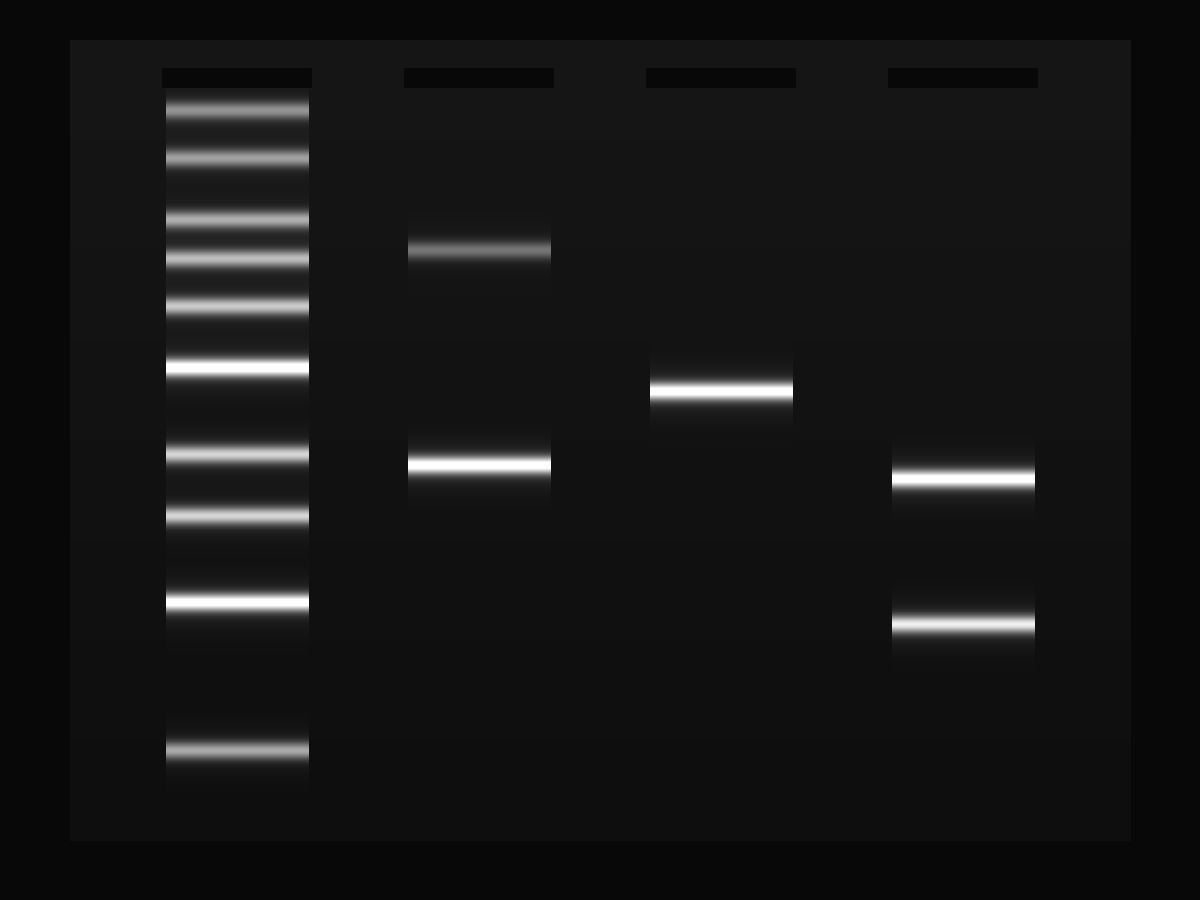
Virtual gel1 % agarose · 1 kb ladder
Virtual gel: a 1 kb ladder, uncut pUC19, a single EcoRI band at 2.7 kb, and EcoRI plus ScaI bands at 1.8 and 0.9 kb
Restriction check Two cuts, two bands, as designed.
EcoRI✓ cuts once · 397
ScaI✓ cuts once · 2,180
Fragments✓ 1,783 + 903 bp
Resolvable on 1 %✓ 880 bp apart

Computed from the pUC19 sequence

Check your design
before the bench.

Check your construct and assembly before ordering parts, with proposed sequence changes ready for your review.

Primer3 · Biopython · pydna Explore design tools
Source datagfp_induction.csv9 cultures · 3 conditions
Reporter expressionCompare the conditions.

BL21(DE3) · Blank-corrected RFU / OD600

1,2008004000 901101,020
Empty vector
+ IPTG
sfGFP
No IPTG
sfGFP
+ IPTG
Each dot is one cultureBars show the mean
Linked notebook entryGFP induction screen

The induced condition has the highest normalized signal.

Next: confirm in a follow-up run.
Illustrative data · three cultures per condition

Turn results into
your next step.

Compare conditions with the source data behind every chart, then keep the decision linked to your experiment.

Explore analysis tools
Reporter expressionShared lab project · 6 records, linked both ways
sfGFP expression

Induced vs uninduced, 3 cultures each. About 9× over uninduced.

Entry · Mayav2 · 4 links
sfGFP reporter
pET-28a · new RBS
Constructv2 · 5,931 bp
sfGFP reporter
pET-28a · original RBS
Constructv1 · Sep
IPTG induction
BL21(DE3) · 0.5 mM, 18 °C
Protocolv3 · lab library
sfGFP-screen.csv
9 cultures · RFU/OD600
ResultAdi · Wed
In progress
Confirm induction
Second run, same conditions
TaskAdi · due Fri
mCherry expression
Same protocol, same day
Notebook entryAdi · Thu
Uses part Revises Follows Produces Leads to Same protocol

Keep your team’s
work connected.

Keep constructs, protocols, results and tasks together so your team can pick up where the work left off.

Explore team workflows

Bring your work with you.

Import the files you already use. Export sequences, maps, entries and workflows in open formats.

  • SnapGene
  • GenBank
  • FASTA
  • SBOL
  • ApE
View supported formats

Your research stays yours.

No model training on your research. Encryption in transit and at rest. Access and AI controls per workspace.

SOC 2 Type I audit in progress
Security overview